Crafting Worlds in Miniature: How American Artisans Are Bringing Literary Fantasy to Life, One Tiny Room at a Time
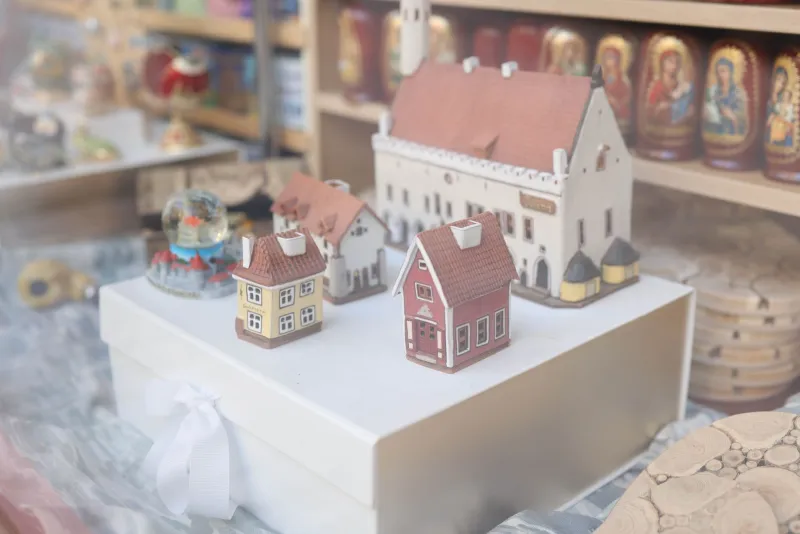
In a spare bedroom in Portland, Oregon, a retired schoolteacher named Margaret is carefully applying a coat of paint — a precise shade of weathered stone — to a wall no larger than a playing card. She is constructing, with painstaking attention to detail, a Borrower's living space: the kind of domestic interior that Mary Norton described in her 1952 novel, assembled from thimbles and thread spools and scraps of fabric that most people would consign to the recycling bin. Margaret has been at it for three years. She estimates she is perhaps halfway finished.
"The books gave me the architecture," she says, gesturing at a well-worn paperback copy of The Borrowers propped open beside her worktable. "Everything else is interpretation."
Margaret is not alone. Across the United States, a vibrant and remarkably well-organized community of miniature world-builders has emerged — one that draws its creative sustenance not from interior design catalogs or home improvement media, but from the shelves of fantasy and literary fiction. These are craftspeople for whom a novel is not merely a reading experience but a blueprint, a set of imaginative coordinates from which an entire physical world might be extrapolated.
From the Page to the Workbench
The relationship between literary fantasy and miniature craft has a longer history than most people realize. Dollhouses themselves have existed in various forms since the sixteenth century, and their evolution has always been entangled with storytelling — the impulse to construct a world in miniature is, at its root, the same impulse that drives a novelist to populate a fictional landscape with convincing detail.
What has changed in recent decades, particularly in the United States, is the degree to which literary source material has become the explicit organizing principle of miniature creation. Hobbyists who once built generic Victorian parlors or mid-century modern kitchens are increasingly turning to specific fictional worlds as their reference points. Tolkien's Shire, with its round doors and vegetable gardens, has inspired an entire subgenre of miniature building. The hidden spaces of Swift's Lilliput — those intricate, impossible cities of perfect proportion — have found their physical counterparts in the workshops of dedicated artisans from Maine to California.
Denver-based builder and educator Carlos, who teaches miniature construction workshops at a local arts center, traces the shift to the rise of online communities in the early 2010s. "Before social media, this was a solitary pursuit," he explains. "You'd work in your basement, go to maybe one or two conventions a year, and that was your community. Now you're in daily conversation with hundreds of people who share the same references, the same books, the same passion."
The Literary Shelf as Inspiration Board
For the literary miniaturist, the bookshelf functions as something between a research library and a mood board. When asked to name their primary influences, creators across the country return again and again to a recognizable canon: Norton's Borrowers series, E.B. White's Stuart Little, Tolkien's Middle-earth novels, and — perhaps most significantly — Swift's Gulliver's Travels, which many cite as the foundational text of the entire tradition.
"Swift understood that the miniature world is always a comment on the full-sized one," says Priya, a tabletop world-builder based in Austin, Texas, who creates elaborate dioramas that she uses as settings for collaborative storytelling sessions. "When I'm building, I'm always thinking about what the scale is saying — what it reveals about proportion, about power, about what we choose to make important."
Priya's current project is a recreation of a Lilliputian government hall, rendered in extraordinary detail: tiny painted portraits on the walls, a speaker's podium fashioned from a walnut shell half, rows of miniature benches occupied by figures she has sculpted herself from polymer clay. The project, she says, began as a reading group exercise — she and a group of friends were working through Gulliver's Travels together — and gradually expanded into something that now occupies a six-foot table in her living room.
This migration from reading to making is a pattern that emerges repeatedly in conversations with American miniaturists. The books do not merely inspire the work; they actively structure it, providing narrative logic and imaginative permission that purely aesthetic projects sometimes lack.
Online Communities and the Collaborative Turn
Perhaps the most significant development in American miniature culture over the past decade has been the transformation of what was once a largely private practice into a richly collaborative one. Platforms including Reddit, Instagram, and a constellation of dedicated Discord servers have made it possible for builders to share work-in-progress photographs, solicit feedback, and — crucially — develop shared fictional frameworks that give individual projects a larger narrative context.
Several online communities have organized themselves explicitly around literary themes. One Reddit forum dedicated to "literary miniatures" has accumulated tens of thousands of members, many of whom participate in monthly challenges tied to specific books or authors. A recent challenge, organized around the theme of "worlds within worlds" and drawing on both Swift and Tolkien, generated more than four hundred submissions from across the country.
"What I love about the online community is that everyone brings their own reading to the work," says James, a retired architect in Savannah, Georgia, who moderates one such forum. "Two people can both be inspired by the same chapter of the same book and produce completely different miniatures. The text is the starting point, not the destination."
A Reading List for the Aspiring World-Builder
For those moved to explore the literary foundations of this creative tradition, the following titles represent an excellent starting point — each offering not only a memorable story but a richly imagined physical world that practically invites reconstruction.
- Gulliver's Travels by Jonathan Swift — The ur-text of miniature literary imagination, and still the most philosophically rich.
- The Borrowers by Mary Norton — Unmatched in its attention to the domestic details of small-scale life.
- Stuart Little by E.B. White — Essential for its portrait of a miniature sensibility navigating a full-sized city.
- The Hobbit by J.R.R. Tolkien — Bag End alone has inspired more miniature builds than perhaps any other fictional dwelling in literature.
- The Indian in the Cupboard by Lynne Reid Banks — A meditation on the ethics and wonder of bringing miniature worlds to life.
- The Littles by John Peterson — An American counterpart to the Borrowers, set firmly in suburban US life.
A Natural Home
What emerges from any extended conversation with this community is a portrait of people who are, at their core, readers — individuals for whom literature has always been less a passive experience than an active one, an invitation to inhabit and extend the worlds they encounter on the page.
In that sense, the American miniature world-building community and the spirit of Retell Lilliput are natural companions. Both are animated by the conviction that the imaginative worlds created by writers like Swift, Norton, and White are not fixed artifacts but living spaces — places that can be entered, explored, and, in the hands of a skilled and devoted craftsperson, rendered in three dimensions for all to see.
Margaret, back in her Portland workroom, sets down her paintbrush and holds the tiny stone wall up to the light. It is, by any measure, a remarkable object: a fragment of a world that exists only in a novel and, now, in her hands.
"People ask me why I do this," she says. "I always say the same thing. The books made me feel like these places were real. I'm just trying to prove they were right."