What Travels in the Hatbox: Inside the Lending Exchanges Where Americans Borrow Tiny Worlds for a Week

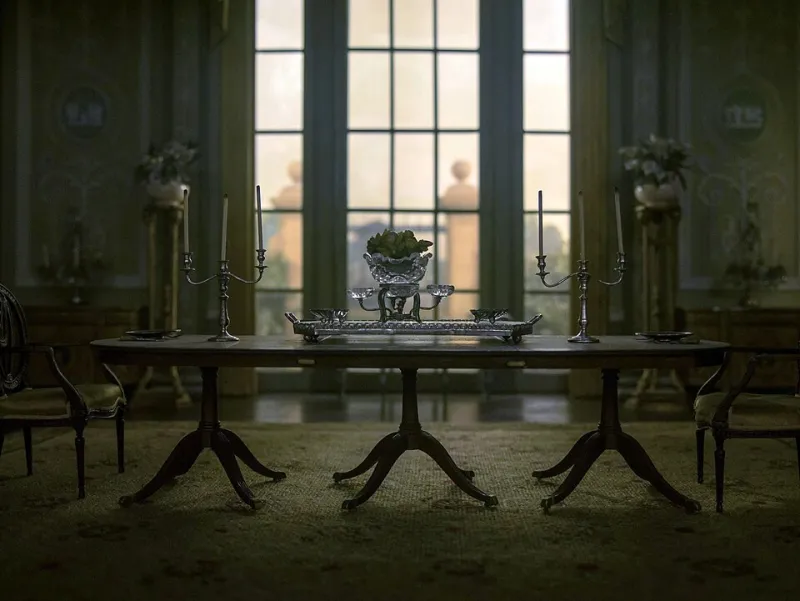
Photo: vintage round hatbox open with miniature room diorama inside and handwritten notebook, via i.pinimg.com
A hatbox is a strange thing to check out of a library. It is round, it is padded, and inside it, cradled in foam cut to the shape of a chimney and a weathervane, sits a room roughly the size of a hardcover book. It has a card pocket glued to the underside of the lid. It has a due date. And, increasingly, it has a small notebook inside in which strangers write to one another about who they believe lives there.
The practice is not centralized and not new, but it has spread in recent years across library-adjacent programs, maker spaces, and informal community exchanges in the United States. The mechanics vary. The premise does not: a miniature world is more durable when it circulates than when it is shelved.
A Due Date for a Diorama
Lending programs tend to converge on similar rules. A loan period of one week, occasionally two. A condition sheet signed at checkout and again at return. A padded box with custom foam, because the most fragile elements of a miniature room — a lamp shade, a stair rail, a paper curtain — are precisely the elements that make it worth borrowing. Late fees, where they exist at all, are nominal and usually donated.
Organizers describe the same early anxiety: that borrowed objects will come back damaged. In practice, the opposite tends to occur. Borrowers handle a loaned world more carefully than they would handle their own possessions, and volunteers report that repairs are more often needed for the wear of transit than for carelessness.
The Note Inside the Lid
The distinguishing feature of these exchanges is not the loan. It is the annotation. Most boxes include a small notebook, a few pencils, and a prompt printed on the first page: leave a line about who lives here, or what happened the night before, or what you noticed that the last reader missed.
The prompts are deliberately open, and the resulting entries are rarely reviews. They are fragments — a name for a cat that appears in no room, a theory about the locked door at the back of the hallway, a description of a smell. Over successive loans, the notebook becomes a layered document, part guestbook and part collaborative fiction, written by people who have never met and who share only a week with the same small place.
Borrowing as Literary Participation
Ownership encourages completion. Borrowing encourages interpretation. A collector eventually stops looking at a finished piece; a borrower has seven days in which to look at nothing else.
There is also a matter of accountability. A returned world must be returned in condition, which means the borrower has to notice it closely enough to know what condition it was in. Attention of that kind is the same attention a careful reader brings to a short story — the sense that every object on the table was placed there for a reason and that the reason can be inferred.
A Short List of Where These Exchanges Appear
Most programs fall into a handful of recognizable shapes, which is useful for anyone hoping to find one nearby.
- Library-adjacent lending desks. A branch library or friends-of-the-library group stores boxes behind the circulation desk and catalogs them alongside books, sometimes under a separate card series.
- Maker-space circulations. Community workshops with a miniature-building membership lend finished pieces to members, often in exchange for a repair shift.
- Church-basement and grange-hall exchanges. Seasonal programs, frequently built around a winter reading theme, with boxes rotated monthly.
- Museum-partnered pop-ups. Short-run programs in which a regional museum lends display pieces to neighborhood venues for a week at a time.
- Private hatbox circles. Informal groups of six to twelve builders who pass boxes among themselves and mail them when geography requires it.
The Return Journey
What comes back is rarely identical to what went out. The physical condition sheet may be unchanged, but the notebook will not be. A returned world has acquired, in the space of a week, a set of proposed histories that its maker never wrote — and, in some cases, a small correction: a chair moved to face the window, a book left open on the desk.
Organizers generally permit this. A borrowed world is not a sealed artifact; it is a text with a generous margin. The card pocket in the lid, stamped and restamped, is the record of how many readers have taken it up — and, in the more ambitious programs, the notebooks are eventually transcribed and archived, so that the shared fiction outlasts the box.