The Lilliputian Marketplace: Inside the Surprisingly Viable Economy of America's Miniature Craft Entrepreneurs
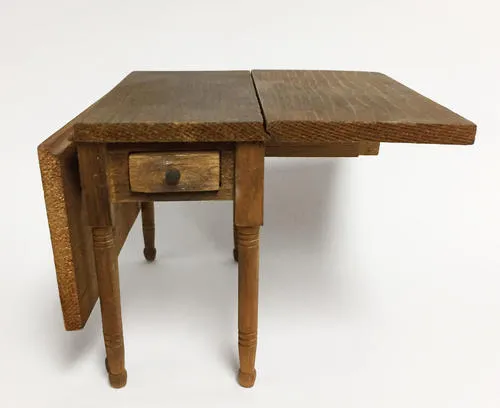
Photo: Federal Government, Public domain, via Wikimedia Commons
If you wish to understand a society's economic imagination, examine what it chooses to make small. The Borrowers hoarded postage stamps as carpets and used thimbles as cooking pots because resourcefulness was their economy. America's miniature craft entrepreneurs are operating on a not entirely different principle: finding abundance in what others consider marginal, and building genuine livelihoods in the spaces between recognized industries.
The miniature crafting market in the United States is not a hobbyist footnote. It is, by any reasonable measure, a functioning creative economy—one with its own platforms, price hierarchies, customer communities, and emerging professional norms. Understanding it requires setting aside assumptions about what "serious" artistic commerce looks like.
What the Numbers Actually Suggest
Precise figures for the miniature crafting sector are elusive; no federal category cleanly captures it. But the signals are consistent. Etsy's internal data, referenced in several trade publications, has identified miniature furniture, tiny food replicas, and dollhouse accessories among its most consistently searched handmade categories. Independent surveys conducted by miniature enthusiast organizations suggest that several thousand American makers derive meaningful income—defined as more than $15,000 annually—from miniature craft sales alone.
For a fuller picture of the financial landscape, consider the following resources that serious students of this economy would do well to examine:
The Handmade Marketplace by Kari Chapin — Though not miniature-specific, this remains the foundational text for understanding how independent craft sellers build sustainable businesses on platforms like Etsy. Its chapters on pricing strategy and community-building are directly applicable to the miniature sector's particular economics.
Etsy's Annual Seller Reports — Published yearly and freely available, these documents offer the clearest publicly accessible window into what categories perform well, what price points sustain seller engagement, and how platform algorithm changes affect niche markets. Miniature categories have appeared with increasing frequency in recent editions.
The Artist's Guide to Grant Writing by Gigi Rosenberg — Several miniature makers have successfully pursued arts grants by framing their work as material culture preservation or folk art practice. Rosenberg's guide demystifies the grant application process for artists who do not hold formal credentials.
Patreon's Creator Economy Reports — Available on Patreon's website, these annual summaries document how subscription-based patronage has evolved. Craft and making categories, which include miniaturists, have shown consistent year-over-year growth in both creator count and average subscription revenue.
The Etsy Model and Its Limits
For most miniature entrepreneurs, Etsy represents the entry point. The platform's search architecture rewards specificity, and miniature crafting is a field defined by specificity: a maker who produces hand-painted Tudor-era dollhouse kitchen accessories occupies a far less competitive niche than one selling generic "miniature furniture." This granularity, which might seem like a commercial liability, functions instead as a form of market differentiation.
Jessamine Cho, who operates a miniature botanical shop from her Portland, Oregon, apartment, began selling pressed-flower fairy garden accessories in 2020 and now generates approximately $38,000 annually from Etsy sales alone. "The platform rewards you for being very specific about what you make," she says. "The more niche you go, the less competition you face, and the more your customers feel they've found something genuinely rare."
Yet the Etsy model carries well-documented risks. Fee structures have increased repeatedly in recent years, and algorithm changes can significantly disrupt a seller's visibility overnight. Experienced miniature entrepreneurs typically treat Etsy as one revenue channel among several rather than as a stable foundation.
Patreon and the Subscription Revolution
The subscription patronage model has proven transformative for makers whose work does not lend itself easily to per-item sales. Building an elaborate miniature Victorian townhouse over eight months generates no Etsy revenue during construction. A Patreon community, however, can sustain a maker throughout the process—funding materials, tools, and living expenses in exchange for behind-the-scenes access, tutorial content, and the particular intimacy of watching something intricate come into existence over time.
Recommended reading for makers considering this model:
- The Business of Belonging by David Spinks — A rigorous examination of how community, rather than content, is the actual product in subscription-based creative businesses. Essential for any maker considering Patreon.
- Your Music and People by Derek Sivers — Despite its musical focus, Sivers's collection of essays on connecting directly with an audience contains some of the clearest thinking available on why small, devoted communities outperform large, indifferent ones.
- Superfans by Pat Flynn — Flynn's argument that a creator needs far fewer dedicated supporters than conventional wisdom suggests is particularly relevant to miniature makers, whose audience is inherently specialized.
The Question of Professional Legitimacy
Perhaps the most interesting dimension of the miniature craft economy is the challenge it poses to conventional definitions of professional artistry. American cultural institutions—grant-making bodies, academic programs, critical publications—have historically organized themselves around mediums and forms with established pedigrees. Miniature crafting occupies an ambiguous position: too craft-adjacent for fine art institutions, too art-adjacent for pure craft taxonomies.
This ambiguity, paradoxically, has become a form of freedom. Without a credentialing infrastructure to satisfy, miniature entrepreneurs define their own standards of excellence and communicate those standards directly to their customers. The result is a marketplace in which reputation is built through demonstrated skill and community trust rather than institutional validation.
For makers navigating this terrain, two additional texts merit attention:
- The War of Art by Steven Pressfield — Its discussion of professional versus amateur orientation resonates strongly with makers who must self-define their own professional standards.
- Small Giants by Bo Burlingham — Profiles of companies that chose depth over scale offer a useful framework for miniature entrepreneurs who measure success by craft quality and community connection rather than revenue growth.
A Market Built at One-Twelfth Scale
The miniature craft economy will not displace any major industry. It is not trying to. What it represents, instead, is a demonstration that creative viability does not require mass-market appeal, institutional endorsement, or conventional scale. In a country where the definition of legitimate artistic labor has always been contested, the makers building tiny economies in their spare rooms are advancing a quiet but consequential argument: that a world constructed at one-twelfth scale can sustain a life lived at full size.