The Littlest Readers: How Miniature-World Fiction Is Quietly Transforming American Literacy Education
There is a particular kind of courage required to read a book when reading itself feels like an act of defeat. For children who struggle—those who sound out syllables while their classmates race ahead, who dread the moment a teacher calls on them aloud—the very act of opening a novel can feel less like an invitation and more like an exposure. It is perhaps no coincidence, then, that the literary figures who have proven most effective at reaching these children are themselves defined by their smallness in a world built for others.
Across the United States, a growing number of school districts and public library systems have arrived, sometimes independently and sometimes through coordinated initiative, at a striking conclusion: miniature-world fiction works. Not merely as entertainment, though it excels there too, but as a pedagogical instrument of genuine and measurable efficacy.
A Curriculum Built on Borrowed Worlds
The Multnomah County Library system in Portland, Oregon, was among the earlier adopters of what its youth services coordinators began calling, informally, the "small worlds" reading strand. Introduced as a supplemental program for children in the second through fourth grades who were reading below grade level, the initiative paired classic miniature-world titles—Norton's The Borrowers, E.B. White's Stuart Little, and T.H. White's lesser-known Mistress Masham's Repose—with structured discussion guides designed to build both decoding skills and narrative comprehension.
The results, tracked over two consecutive school years, showed that participating children demonstrated an average improvement of 1.3 grade levels in reading fluency, compared to 0.8 grade levels among a comparable group using a standard supplemental reading list. More striking still was the attendance data: children enrolled in the small worlds strand showed markedly higher session attendance than those in control groups, a metric that librarians noted with particular satisfaction.
"The books kept them coming back," said one youth services librarian involved in the program. "That sounds obvious, but it isn't. A lot of intervention reading feels like medicine. These books felt like a secret."
Why Small Heroes Speak to Struggling Readers
Reading specialists who have studied the phenomenon offer several converging explanations for the outsized effectiveness of miniature-world narratives. The most compelling centers on identification.
Children who find school difficult—academically, socially, or emotionally—frequently experience themselves as small in precisely the way Pod, Homily, and Arrietty Clock are small: present in a world that was not designed with them in mind, resourceful by necessity, and perpetually aware of how much larger everything else is. The Borrowers do not merely borrow thimbles and postage stamps; they borrow dignity and agency from an environment that would otherwise render them invisible. For a child who has felt invisible in a classroom, that narrative resonance is immediate and profound.
Dr. Miriam Castellano, a reading development specialist who has consulted with several Texas school districts on literacy intervention, describes the phenomenon in terms of what she calls "proportional empathy." When a protagonist is small, she argues, the reader's imagination is required to do more work—to scale the world, to recalibrate danger and distance, to feel the enormity of a staircase or the menace of a household cat. This imaginative labor, she contends, is precisely the cognitive exercise that builds the kind of deep comprehension that standardized reading programs often struggle to cultivate.
"There is something about the architecture of these stories," Dr. Castellano explained during a panel discussion at a regional literacy conference in Austin. "The reader has to construct the world alongside the character. That construction is reading comprehension. It is inference, it is visualization, it is sustained attention. And children do it willingly because the world is so worth constructing."
From Classroom to Community: District-Level Initiatives
The Charlotte-Mecklenburg Schools district in North Carolina has taken perhaps the most systematic approach to integrating miniature-world literature into its early literacy curriculum. Beginning in the 2021–2022 academic year, the district's Office of Academic Achievement piloted a program called "Big Imaginations" in twelve of its Title I elementary schools—institutions serving predominantly low-income communities where reading gaps tend to be most acute.
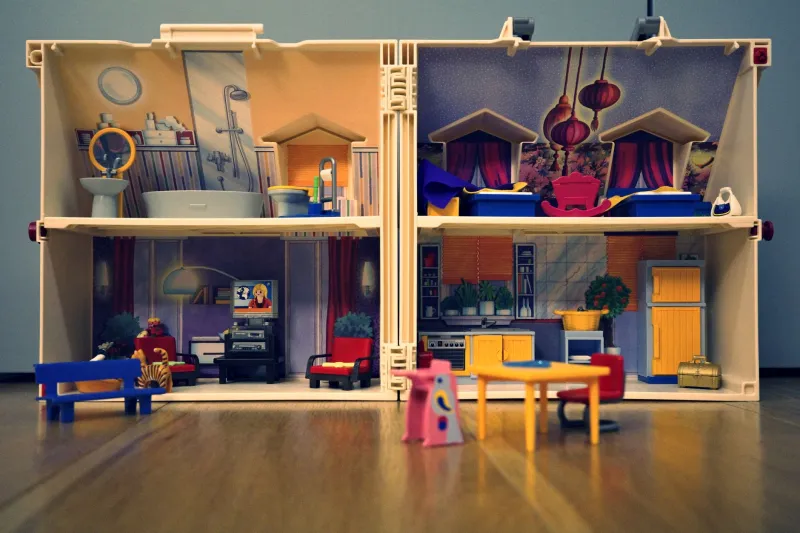
The program placed physical copies of The Borrowers and The Littles in every participating classroom, supplemented by read-aloud sessions, scale-based art projects (children were invited to design furniture for a borrower-sized home), and writing prompts that asked students to narrate a single day from the perspective of a miniature character. Teachers were provided with discussion guides emphasizing not only plot comprehension but emotional inference—asking children to consider how Arrietty might feel watching a human child play with toys she could never touch, or how Tom Little might navigate a world in which every door is an obstacle.
Preliminary findings from the pilot were sufficiently encouraging that the district expanded the program to thirty-one schools in the following year. Teachers reported not only improved reading scores but a notable shift in classroom culture around reading itself. Children began bringing in their own miniature-world discoveries—The Indian in the Cupboard, The Mennyms, Mistmantle Chronicles—and sharing them with a proprietary enthusiasm that educators recognized as one of the rarest and most valuable outcomes of any literacy program: voluntary reading.
The Imaginative Architecture of Empathy
There is a quality unique to the finest miniature-world fiction that deserves recognition beyond its pedagogical utility, and it would be a disservice to reduce these books to their measurable outcomes. What Norton, Peterson, White, and their literary kin understood—whether consciously or through the intuition of gifted storytellers—is that smallness is never merely a physical condition. It is a philosophical one.
To be small is to be attentive in ways the large cannot afford to be. Arrietty Clock notices the grain of a wooden floorboard, the particular quality of afternoon light through a skirting board gap, the way a human's breath smells of warm tea. Her world is not diminished by its scale; it is intensified by it. And children, who are themselves small in a world of adults, who are themselves navigating spaces and systems built for those larger than themselves, recognize this intensification instinctively.
This is, perhaps, the deepest reason these books work. They do not condescend to smallness. They celebrate it as a form of perception, a mode of courage, a way of inhabiting the world that the large have forgotten or never known.
A Foundation for What Comes Next
For educators invested in building lifelong readers rather than merely proficient test-takers, the miniature-world fiction movement offers something rarer than data: it offers a model. It demonstrates that the books most likely to transform a child's relationship with reading are not necessarily the most obviously instructional, the most culturally representative, or the most carefully leveled. They are, sometimes, simply the books that make a child feel seen—even when, or perhaps especially when, the protagonist is no taller than a clothespin.
In classrooms from Portland to Charlotte, in library reading rooms from Austin to Akron, children are discovering that the smallest worlds in literature contain some of its most expansive truths. And they are discovering this, crucially, because someone thought to hand them a book about a family who lives beneath the floorboards—and trusted that they would understand exactly what it means to make a home in the margins of someone else's world.
That trust, it turns out, is being repaid with interest.