Scale Models of Sorrow: The American Hobbyists Reconstructing Cold Cases One Tiny Room at a Time
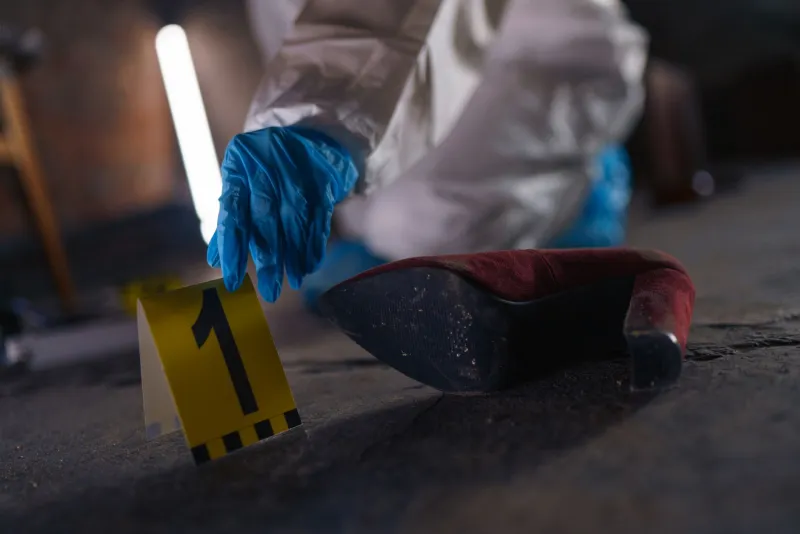
There is something philosophically unsettling — and, at the same time, strangely clarifying — about holding a murder scene in the palm of your hand. The walls are no larger than a paperback novel's spine. The furniture has been assembled from balsa wood and painted with a single-hair brush. A tiny overturned glass casts a shadow the size of a fingernail. And yet, for the growing community of American true crime enthusiasts who construct these meticulous miniature reconstructions, the experience of bending low over a one-inch-to-one-foot scale model can produce something that hours of podcast listening or documentary watching rarely achieves: genuine, almost visceral comprehension.
This is the world of the dollhouse detectives — a loose, decentralized subculture of makers, storytellers, and armchair investigators who have discovered that physical miniaturization can be a surprisingly powerful investigative and artistic tool.
A Legacy Cast in Miniature
To understand where this community is going, one must first appreciate where it began. Frances Glessner Lee, the Chicago heiress who became the unlikely godmother of American forensic science, spent decades in the mid-twentieth century constructing her now-legendary "Nutshell Studies of Unexplained Death" — eighteen dioramas depicting staged death scenes with extraordinary precision. Lee built these models not as curiosities but as training instruments for homicide investigators, and her work remains housed at the Office of the Chief Medical Examiner in Baltimore, still used in seminars today.
Lee understood something that her contemporaries were slow to grasp: that a miniature world, by virtue of its scale, compels a particular quality of attention. You cannot glance at a Nutshell Study. You must lean in. You must slow down. You must look at the same details that a detective at a real scene might overlook precisely because they were too large, too familiar, or too overwhelming to register.
The hobbyists who have emerged in the twenty-first century's true crime boom are, whether they know it consciously or not, Lee's intellectual heirs.
The Makers and Their Methods
Among the most prominent voices in this community is a Minnesota-based creator who publishes under the name Casework Miniatures and has, over the past four years, constructed detailed reconstructions of several prominent unsolved American cases from the twentieth century. Working from court records, crime scene photographs released through public records requests, and extensive correspondence with investigative journalists, she builds each model over the course of several months, documenting the process on social media with a following now exceeding forty thousand.
"The act of building forces you to ask questions you wouldn't think to ask otherwise," she explained in a recent interview with an independent true crime newsletter. "When I'm deciding where to place a piece of furniture, I have to know why it was there. I have to understand the geometry of the space. And sometimes that geometry doesn't match the official account at all."
A separate practitioner, based in the Pacific Northwest, has taken a more archival approach. He specializes in reconstructing the crime scenes of cases where the original evidence has been lost, destroyed, or was never properly documented — a phenomenon disproportionately common in cases involving victims from marginalized communities. For him, the miniature reconstruction is less about solving a case than about insisting that it be taken seriously.
"If I build it," he has written on his platform, "it existed. It mattered. The space where something terrible happened deserves to be recorded, even if no one in authority bothered to do it properly the first time."
The Ethics of Intimate Scale
Not everyone within the broader true crime community regards this practice with admiration, and the ethical debates are neither simple nor easily resolved. Critics raise several legitimate concerns, the most pressing of which involves the families of victims. A meticulously crafted diorama of a loved one's death scene — however well-intentioned — can constitute a profound intrusion on grief, particularly when shared publicly online. Several family advocates have spoken out against the practice, arguing that the aestheticization of violence, however miniaturized, risks transforming tragedy into spectacle.
The creators themselves tend to engage with these concerns thoughtfully, if not always conclusively. Most have adopted informal community standards: avoiding reconstructions of cases involving living victims or survivors, refraining from depicting the victims themselves within the models, and focusing on spatial and evidential elements rather than graphic violence. Some have made it a practice to contact victim advocacy groups before publishing their work.
There is also the question of epistemological humility — the risk that a beautifully constructed model, by its very persuasiveness, might entrench a particular interpretation of events and crowd out alternative readings. A miniature world, like any narrative, reflects the choices of its maker. What is included, what is omitted, what is rendered in loving detail and what is left vague: these are all editorial decisions with real interpretive consequences.
Why Miniature? Why Now?
The timing of this subculture's emergence is not coincidental. It has grown alongside — and, in some ways, as a reaction against — the dominant mode of true crime consumption in America: the podcast, the docuseries, the endlessly scrolling Reddit thread. These formats, for all their virtues, are fundamentally passive. They deliver information to an audience. The miniature reconstruction, by contrast, demands active participation. It requires the maker to inhabit the space, to make decisions, to build understanding incrementally and with one's own hands.
There is something deeply Lilliputian about this impulse — the conviction that a world rendered at reduced scale can paradoxically reveal more than a full-sized examination. Swift's travelers always learned the most when they were forced to look closely at what they might otherwise have walked past. The dollhouse detectives operate on a similar principle: that compression clarifies, that constraint produces insight, and that the act of holding something small in your hands is itself a form of care.
In a media landscape that frequently treats crime as content and victims as narrative devices, these miniaturists are, at their best, insisting on something more deliberate. They are arguing, through the patient language of craft, that some stories deserve to be built rather than merely consumed — assembled piece by piece, room by room, in the hope that the act of construction might, at last, bring something like justice into view.
The Nutshell Tradition, Reimagined
Frances Glessner Lee once wrote that her dioramas were designed to convict the guilty, acquit the innocent, and find the truth in a nutshell. That formulation — the truth in a nutshell — carries a particular resonance for the community that has grown up in her long shadow. These contemporary makers are not forensic scientists. They carry no official authority. Their reconstructions will not be admitted as evidence in any courtroom.
And yet, they are doing something that formal institutions have repeatedly failed to do: they are paying attention. They are building, with their own hands and at their own expense, a record of what happened in rooms that the world has largely chosen to forget. In that sense, their miniature worlds are not merely artistic exercises. They are, in the oldest and most earnest meaning of the word, acts of witness.