Charting the Invisible: Inside the American Fan Community That Hand-Draws the Maps of Worlds Too Small to Visit
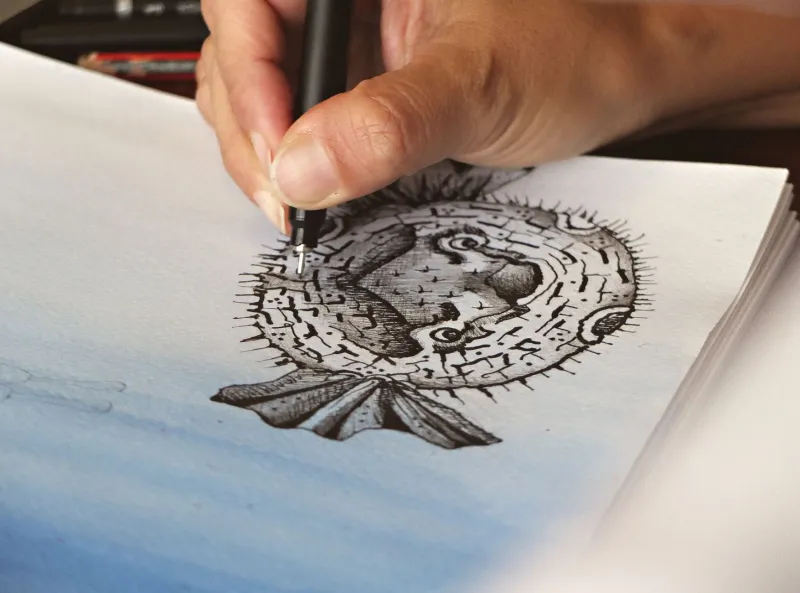
Every serious traveler carries a map. The fan cartographers of the American fantasy community have taken this principle to its most gloriously impractical extreme: they are making maps of places that do not exist, for journeys that cannot be taken, to scales that render the familiar world enormous by comparison. They are, in the most literal sense imaginable, the cartographers of Lilliput — and they are extraordinarily good at their work.
The Subreddit at the Edge of the Known World
Begin, as so many contemporary communities do, on Reddit. The subreddit r/FantasyMaps has grown to well over 200,000 members, and on any given day its front page displays a remarkable range of hand-drawn and digitally rendered geographies: archipelagos from unpublished novels, dungeon layouts from tabletop campaigns, the carefully reconstructed territories of miniature civilizations described in a single paragraph of a beloved book. The maps range from rough pencil sketches to works of such elaborate beauty that they might plausibly hang in a gallery.
What unites them is not style but obsession. The community's most prolific contributors speak about their work in terms that would be familiar to any dedicated scholar — hours of research, multiple drafts, consultations with primary texts to ensure that the geography aligns with every narrative detail. One prominent contributor, who goes by the handle Thornwick_Atlas and has been mapping fictional worlds for nearly eight years, describes his process in terms that reveal the depth of the commitment involved.
"When I start a new map, I read the source material three or four times just taking notes on spatial relationships," he explained in a community thread that has since become something of a reference document for newcomers. "You'd be surprised how much geographic information is embedded in the prose. The direction a character walks, how long a journey takes, which way the light falls in a particular scene — it all adds up to a coherent world, even when the author never drew a single line."
Why Miniature Worlds Demand Maps
There is something particularly fitting about the fact that fan cartography has flourished most intensely around miniature fictional worlds — the tiny kingdoms, the Borrower-scale landscapes, the pocket civilizations that populate American fantasy literature and gaming culture. Miniature worlds present a cartographic paradox: they are, by definition, small, and yet the imaginative investment they demand is enormous. A reader who has spent three hundred pages inhabiting a world the size of a garden feels, with some justification, that she knows its geography intimately. The map is a way of externalizing that knowledge, of proving to herself and others that the world is real enough to navigate.
This is precisely the impulse that animated Swift's original Lilliput. The famous opening maps of Gulliver's Travels — those careful illustrations of lands that no European cartographer had charted — were satirical in intent but sincere in execution. They argued, visually, that the miniature world deserved the same rigorous documentation as any territory worth exploring. Contemporary fan cartographers are making the same argument, with considerably more sophisticated tools.
From DeviantArt to Published Canon
The community's influence has not remained entirely within the fan sphere. Several American game designers and novelists have acknowledged that fan-made maps of their worlds have informed subsequent official publications — a phenomenon that raises genuinely interesting questions about the boundaries between audience and author.
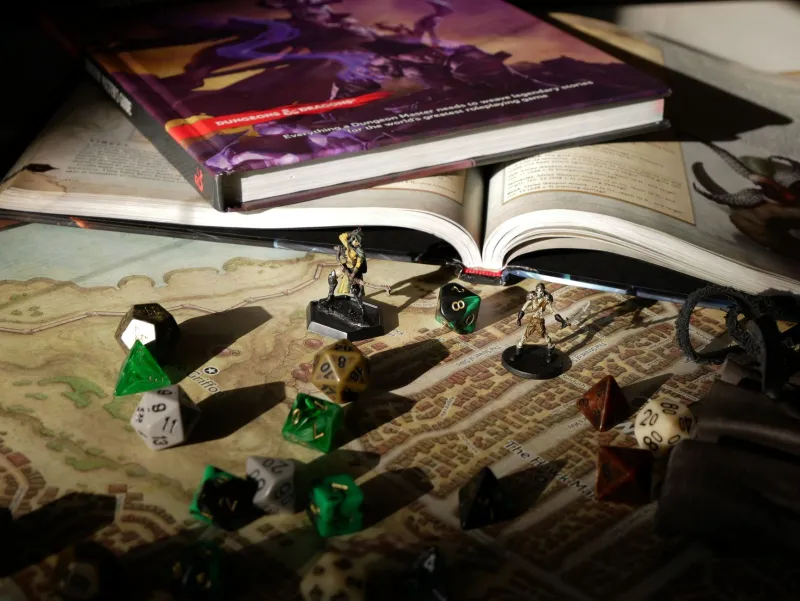
The tabletop role-playing game industry has been particularly porous in this regard. Games like Dungeons & Dragons and the sprawling ecosystem of independent RPGs that has flourished around it have long relied on fan cartographers to flesh out the geographic implications of their published settings. In some cases, fan maps have been officially licensed and incorporated into published sourcebooks, with the original hobbyist cartographers receiving credit and, occasionally, compensation.
Novelists have been somewhat more guarded in their acknowledgments, but the influence is traceable. Several prominent authors of miniature-world fantasy have noted in interviews that fan maps of their worlds circulating online have occasionally revealed geographic inconsistencies in their own prose — errors that were quietly corrected in subsequent editions. The fan cartographer, in these instances, functioned as a kind of peer reviewer, bringing to the author's world a spatial rigor that the narrative process does not always demand.
The Tools of the Trade: A Recommended Resource List
For readers of Retell Lilliput who find themselves drawn to this community, the following resources represent an excellent point of entry into both the practice and the culture of fan cartography.
- Inkarnate (inkarnate.com): A browser-based map-making tool widely used by the community, with assets specifically designed for fantasy cartography. Free tier available; used extensively by beginners and experienced practitioners alike.
- Wonderdraft: A desktop application favored by more advanced cartographers for its flexibility and the quality of its output. Frequently recommended on r/FantasyMaps as the tool of choice for serious work.
- r/FantasyMaps (reddit.com/r/FantasyMaps): The primary online gathering point for the community. The subreddit's wiki contains tutorials, software recommendations, and an archive of exemplary work.
- r/worldbuilding: A broader community focused on fictional world construction in all its dimensions, with a substantial cartographic contingent. Useful for understanding the relationship between map-making and narrative world-building.
- DeviantArt's Fantasy Maps group: One of the oldest continuous online communities for fan cartographers, predating Reddit and still active. The archive contains work stretching back nearly two decades and is an invaluable record of how the practice has evolved.
- The Writer's Map: An Atlas of Imaginary Lands, edited by Huw Lewis-Jones: An essential book for anyone interested in the cultural history of fictional cartography, featuring essays by authors including Philip Pullman, Robert Macfarlane, and Joanne Harris alongside reproductions of maps from literary history.
- Cartographer's Guild (cartographersguild.com): A dedicated forum for fantasy map-makers that predates most social media platforms and maintains an extraordinarily detailed archive of tutorials, challenges, and finished work.
The Intimacy of the Drawn Line
What strikes an outside observer most forcefully about this community is not its technical sophistication, impressive as that often is, but its emotional investment. These are not people making maps because they have been asked to. They are making maps because the worlds they love have become, through the sustained act of reading or playing, as real to them as any geography they have physically inhabited — and the map is their way of honoring that reality.
There is a long tradition, in American literary culture, of taking seriously the imaginative worlds that popular culture has sometimes dismissed as escapist or juvenile. The fan cartographers of r/FantasyMaps and DeviantArt are working squarely within that tradition. They are insisting, with every carefully inked coastline and every painstakingly labeled mountain range, that the miniature world deserves the same rigorous attention as any territory worth exploring.
Swift would have recognized the impulse immediately. He, too, understood that the act of mapping a small world was never really about the world's size. It was about the quality of the attention brought to bear upon it. The cartographers of Lilliput, it turns out, are still very much at work.