Passed Down in Miniature: The American Families Building Fantasy Worlds as Multigenerational Heirlooms
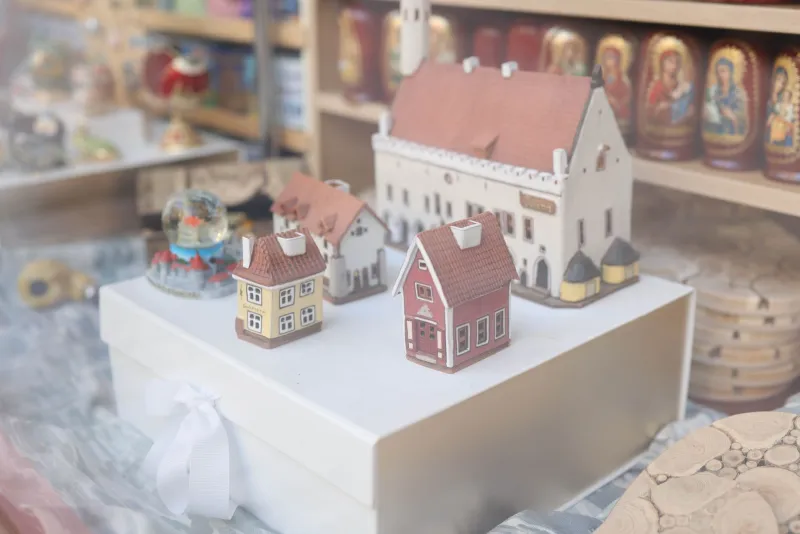
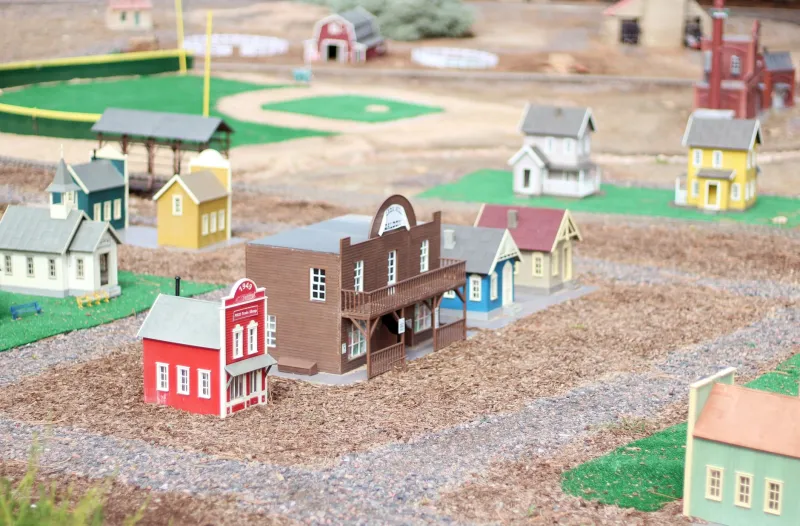
There is a glass-fronted cabinet in a ranch house outside Boise, Idaho, that has been accumulating a world for thirty-one years. It began in 1993 as a single hand-carved cottage, no larger than a hardback novel, placed on a shelf by a mother who had just finished reading The Borrowers aloud to her two daughters. Today, that same cabinet holds a village of forty-three structures, a river fashioned from resin and blue-green mica, a functioning mill wheel driven by a small battery, and a population of hand-sewn residents whose names are recorded in a leather-bound ledger kept in the cabinet's lower drawer. The youngest contributor to this world is nine years old. The eldest is seventy-two.
This is not a collector's installation. It is not destined for auction or exhibition. It is, by the family's own reckoning, an heirloom — as deliberate and irreplaceable as a grandmother's wedding quilt or a grandfather's pocket watch, except that it breathes with accumulated imagination rather than accumulated years.
A New Kind of Family Artifact
The impulse to miniaturize the beloved is ancient. Egyptians buried model boats alongside their dead. Medieval European nobles commissioned tiny replicas of their estates. In colonial America, dolls' houses served as both playthings and pedagogical tools. What is emerging now, however, feels categorically different from these precedents. The families building miniature world installations today are not attempting to replicate the real. They are constructing the imagined — and they are doing so with an explicit awareness that the work will outlast them.
This distinction matters enormously. A replica miniaturizes what exists. A fantasy installation encodes what a family believes, fears, hopes for, and finds funny. It is, in the most literal sense, a mythology at one-twelfth scale.
Parents who have undertaken these projects frequently describe a similar originating impulse: a desire to give their children something that resists the ephemerality of the digital age. In an era when a child's first drawings are more likely to live on a phone than a refrigerator door — and when that phone will eventually be discarded — the physical permanence of a miniature world carries a kind of defiant weight. You cannot accidentally delete a hand-thrown ceramic chimney pot. You cannot lose it to a server migration.
The Grammar of a Shared World
Every multigenerational miniature world develops what its makers tend to call, with varying degrees of self-consciousness, a grammar — a set of internal rules governing what belongs and what does not. Some families enforce strict aesthetic consistency: all structures must be built to the same scale, all materials must be natural rather than synthetic. Others operate with a more permissive logic, allowing each generation to introduce its own visual vocabulary so long as the narrative coherence of the world is maintained.
This negotiation between continuity and change is, of course, precisely the negotiation that defines family life itself. The miniature world becomes a kind of externalized family constitution, a physical record of which values were held firmly and which were revised as new voices joined the conversation.
One maker in western Massachusetts describes the moment her teenage son proposed adding an underground railway system to the family's installation — a network of tunnels connecting the village's outer farms to its central market — as one of the most unexpectedly moving parenting experiences she had encountered. The proposal required a complete restructuring of the cabinet's base layer. It took four weekends. It permanently altered the world's geography. And it is now, she says, the feature most frequently admired by visitors who peer through the glass.
Swift's Shadow, Willingly Cast
It would be remiss, writing from this particular vantage point, not to acknowledge the literary lineage these families are consciously or unconsciously inhabiting. Jonathan Swift's Lilliput was, among many other things, a thought experiment about what it means to render the human world at a scale that permits clear examination. When we shrink something, we gain perspective on it. We can see its proportions, its absurdities, its hidden elegances, in ways that full scale obscures.
The families building these installations are performing a version of the same operation on their own lives. By encoding family stories — the grandfather who was a lighthouse keeper, the aunt who ran away to New Orleans, the child who was afraid of storms — into the architecture of a miniature world, they achieve something that neither a photograph album nor a written memoir can quite accomplish. They make the story inhabitable. A visitor to the installation can lean close, peer through a tiny window, and see the lighthouse keeper's quarters: the miniature charts on the wall, the small brass compass on the desk, the storm lantern hung by the door.
This is storytelling as architecture. It is, in the deepest sense, what Lilliput has always represented to its most attentive readers: not smallness as limitation, but smallness as a lens through which the full complexity of a human world becomes, at last, graspable.
The Question of Succession
Perhaps the most philosophically interesting dimension of these projects is the question of what happens when they are passed down. Unlike a quilt, which is finished when its maker sets down the needle, a multigenerational miniature world is explicitly unfinished. It arrives in the hands of its inheritors as an obligation as much as a gift: here is a world your family made; now continue it.
Some families handle this transition with formal ceremony. One family in suburban Chicago holds what they call a world council whenever a new generation takes custodianship, during which the outgoing generation narrates the history of every structure in the installation and explains the decisions — aesthetic, narrative, personal — that shaped each one. Others are more casual, leaving the world and its ledger to speak for themselves.
What nearly all of these families share, however, is a conviction that the act of continuation is itself meaningful — that choosing to add to a world rather than start fresh is a statement about belonging, about the value of inherited narrative, about the dignity of small, persistent things.
Against Digital Impermanence
There is something quietly countercultural about this tradition. At a moment when American family life is increasingly mediated by platforms designed to harvest attention and monetize memory, the deliberate construction of a physical, analog, multigenerational artifact represents a form of resistance. It insists that some things are worth the slowness they require. It insists that a child who spends an afternoon adding a miniature bookshop to a family installation is doing something more durable than a child who spends an afternoon curating a digital scrapbook.
This is not a technophobic argument. It is an argument about proportion — about ensuring that some portion of a family's imaginative life exists in a form that cannot be deprecated, cannot be archived behind a paywall, and cannot be lost when a company decides to pivot its business model.
The families building these worlds understand, perhaps better than most, what Swift understood when he sent Gulliver to Lilliput: that the act of imagining a smaller world is always, in the end, an act of caring more carefully for the larger one. Their installations are not escapes from family life. They are concentrated expressions of it — every tiny chimney pot and hand-sewn resident a declaration that this family existed, imagined together, and left something behind worth inheriting.