Voices from Beneath the Floorboards: The Independent Podcasters Crafting Serialized Audio Dramas Inside Miniature Civilizations
There is a particular quality of attention that miniature worlds demand. To believe in a civilization tucked inside a wall cavity or thriving beneath a city's oldest subway station, a reader — or in this case, a listener — must lean in. The scale of the imagined world requires a corresponding intimacy from the audience. It is perhaps no surprise, then, that a growing cohort of independent American podcast creators has concluded that audio drama is not merely one vehicle for miniature-world fiction. For many of them, it is the definitive one.
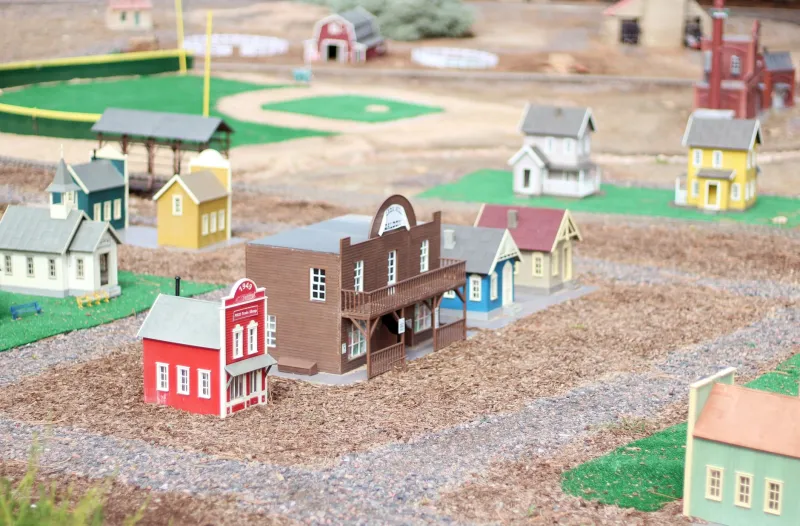
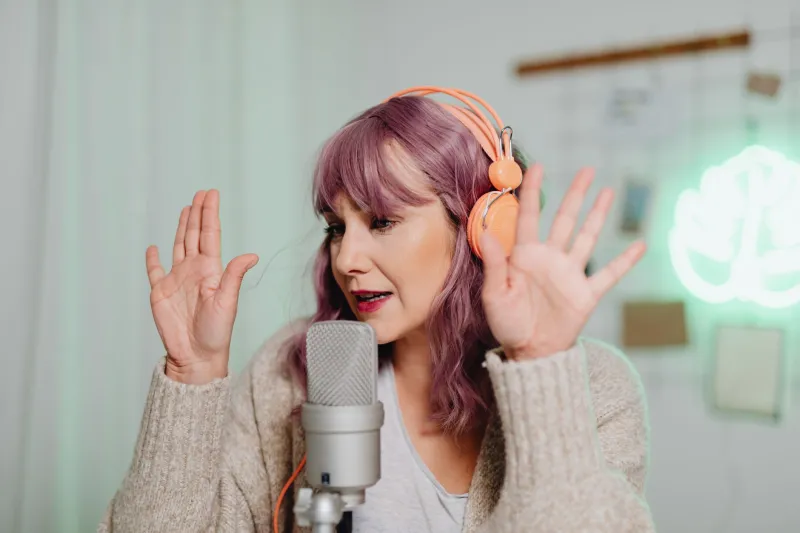
Across platforms such as Spotify, Apple Podcasts, and a constellation of independent hosting services, serialized fiction set in Lilliputian civilizations is quietly accumulating devoted listeners. These productions are not backed by major studios or network budgets. They are, almost uniformly, the work of writers, sound designers, and voice actors operating out of home studios — spare bedrooms, converted closets, and basement offices — who have chosen to spend their creative energy building worlds that exist, within the logic of their narratives, inside shoeboxes, attic insulation, and the hollow spaces beneath old courthouse steps.
The Architecture of Sound at Miniature Scale
What distinguishes these productions from conventional audio drama is the degree to which sound design functions as a form of cartography. In a visual medium, a miniature world can be established through a single establishing shot — a wide frame revealing tiny figures moving through corridors carved from baseboards. In audio, the world must be constructed entirely through acoustic suggestion. Every production choice carries an outsized burden of world-building.
Creators working in this space speak frequently about the challenge and pleasure of designing what might be called a sonic grammar of smallness. The ambient soundscape of a hidden civilization must feel both recognizable and subtly displaced from ordinary human experience. Water dripping through a cracked pipe becomes, in these productions, something between weather and catastrophe. The distant vibration of a furnace overhead registers as geological tremor. A house cat's footsteps translate, through careful audio layering, into the thunder of an approaching predator.
This is not merely a technical exercise. It is, at its best, a form of philosophical reframing — an invitation to hear the world from a perspective radically unlike our own. In this respect, these podcasters are working squarely within the tradition that Jonathan Swift established when he sent Lemuel Gulliver to Lilliput: the miniature world as a lens through which familiar reality appears strange, contingent, and newly interesting.
Serialization and the Logic of Hidden Lives
The serialized format suits miniature-world fiction in ways that extend beyond mere convention. A civilization small enough to inhabit the walls of a brownstone or the understructure of a shopping mall is, by definition, a world of gradual revelation. Its geography cannot be grasped in a single episode; its social hierarchies, its histories, its internal conflicts must be disclosed incrementally, as a traveler might come to understand a foreign country over months rather than days.
Many of the podcasters working in this genre speak about serialization as a structural necessity rather than a commercial strategy. The worlds they are constructing resist summary. A community of several hundred small people living within the mechanical infrastructure of a Chicago elevated train station has, by implication, a political economy, a mythology, a relationship to the human world above it, and a set of intergenerational tensions that cannot be resolved in forty minutes. The serial form accommodates that complexity in a way that a standalone episode or a short story collection cannot.
Listeners, for their part, appear to respond to this complexity with considerable investment. Online communities devoted to specific shows have developed elaborate fan theories about the geography and governance of fictional miniature civilizations, producing the kind of participatory world-building more typically associated with prestige television or long-running fantasy novel series. The intimacy of the listening experience — headphones in, often in private, often at night — may intensify this engagement. To follow a serialized audio drama about hidden, secret lives is itself a somewhat secret, hidden act.
The Literary Inheritance
The creators of these productions are, in many cases, deeply conscious of the literary tradition they are entering. Mary Norton's Borrowers, Stuart Little, T.H. White's Mistress Masham's Repose, and the various diminutive protagonists of American children's literature from the mid-twentieth century onward are frequent reference points in interviews and creator notes. Swift's Lilliput is occasionally invoked, though more often as a cultural shorthand than as a direct influence; the political satire of Gulliver's Travels is less immediately present in these productions than its fundamental imaginative premise — that a world of compressed scale might contain the full range of human experience.
What these podcasters tend to add to their literary inheritance is a specifically contemporary American texture. Their miniature civilizations are embedded in recognizable American landscapes: the decaying infrastructure of Rust Belt cities, the sprawling anonymity of suburban developments, the layered history of neighborhoods in the process of gentrification. The smallness of the fictional communities acquires additional resonance when placed against the scale and velocity of American urban life. A civilization of several hundred people navigating the inside of a condemned Detroit warehouse is, among other things, a meditation on what it means to persist in spaces that the larger world has decided to abandon.
Why Audio, and Why Now
The question of why this particular moment has produced a flowering of miniature-world audio drama does not yield a single answer. The democratization of production technology is part of it; the tools required to produce a professional-sounding podcast are now accessible to individuals without institutional support. The broader podcast boom of the last decade has created audiences habituated to long-form audio storytelling and prepared to follow serialized narratives across many episodes.
But there is also something more particular at work. The intimacy that audio demands — the way it speaks directly into the ear, bypassing the mediation of a screen — creates a relationship between narrator and listener that feels appropriate to stories about worlds that are, by their nature, whispered rather than announced. A civilization living in secret within the walls of human habitation cannot afford to be loud. Neither, in a sense, can the audio drama that gives it voice.
In this respect, the podcasters building miniature worlds are doing something that Retell Lilliput has always understood: that the smallest stories, told with sufficient care, have a way of filling whatever space they are given. The floorboards overhead, after all, are only a ceiling if you have never thought to look at them from below.