Tending the Infinite: What America's Terrarium Obsession Reveals About Our Need to Govern Something Small
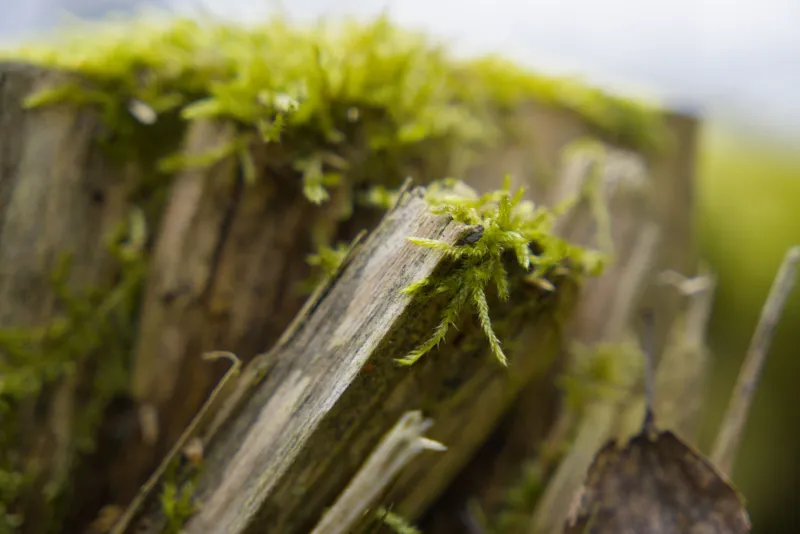
There is a particular kind of stillness that descends upon a person the moment they press a tuft of cushion moss into a bed of horticultural charcoal and watch it settle, perfectly, into place. It is not merely the satisfaction of a task completed. It is something older and more searching — the feeling, however briefly held, of having ordered the world.
Across the United States, that feeling is being pursued with remarkable earnestness. The miniature garden hobby — encompassing terrariums, moss boxes, Wardian cases, and dish gardens — has expanded from a quiet enthusiasm into a full-throated cultural movement. Specialty nurseries report that moss varieties once considered horticultural curiosities are now among their fastest-moving inventory. Online tutorials devoted to closed-ecosystem bottle gardens accumulate hundreds of thousands of views. And in cities from Portland to Pittsburgh, workshops teaching the construction of palm-sized forest floors regularly sell out weeks in advance.
What is happening here? And why now?
The Desire for a Governable World
To understand the terrarium renaissance, one must first resist the temptation to dismiss it as mere decoration. The people who build these miniature ecosystems — and there are millions of them — are not simply filling windowsill space. They are, in a manner that echoes the literary tradition this publication holds dear, constructing alternative worlds and then choosing to inhabit them imaginatively.
Jonathan Swift understood this impulse. When Lemuel Gulliver arrived in Lilliput, the appeal was not only satirical. There was something genuinely intoxicating in the idea of a civilization small enough to comprehend at a glance, complex enough to reward sustained attention, and bounded enough to feel, at least provisionally, knowable. The terrarium builder is engaged in a strikingly similar project. Within the curved glass walls of a twelve-inch vessel, an entire ecology can be observed, tended, and — crucially — understood.
In an era defined by systems too vast and volatile to grasp — algorithmic economies, shifting climate baselines, fractured public discourse — the appeal of governing something small is not escapism. It is philosophy made tactile.
Moss as Meditation
The mental health dimensions of this movement deserve serious consideration. Practitioners consistently describe the act of terrarium building and maintenance in language borrowed from contemplative traditions. The requirement of slow, deliberate attention. The necessity of accepting what the plants choose to do rather than imposing upon them. The meditative rhythm of misting, observing, and adjusting.
Horticulturists who specialize in miniature ecosystems note that closed terrariums in particular model a kind of ecological patience that has few equivalents in contemporary American life. A sealed moss garden, once established, recycles its own moisture in a self-sustaining loop that can persist for years without intervention. Tending one, therefore, teaches a paradoxical lesson: that the most profound act of stewardship is often restraint.
This is, of course, a lesson with considerable resonance beyond the glass walls of a terrarium. Environmental philosophers have long argued that the crisis of ecological destruction in the modern world stems partly from a failure of imagination — an inability to perceive natural systems as worthy of the same careful attention we lavish on our own creations. The miniature garden, in this reading, functions as a kind of moral training ground. One learns, in miniature, how to watch and wait and trust.
The Environmental Conscience in a Jar
It would be an overstatement to claim that every terrarium builder is a committed environmentalist. But it would be equally reductive to ignore the degree to which environmental consciousness suffuses the culture surrounding this hobby. The communities that have grown up around miniature gardening — on social platforms, in local clubs, in the comment sections of specialist newsletters — tend to place considerable emphasis on ethical sourcing, native plant selection, and ecological accuracy.
Many enthusiasts go further, designing their miniature gardens as deliberate homages to specific endangered ecosystems. Bogs, cloud forests, and old-growth understories — habitats under severe pressure in the wider world — are recreated with painstaking fidelity inside containers that sit on kitchen tables in Cleveland and Tucson and Baton Rouge. There is something genuinely moving about this impulse: the desire to preserve, in scaled-down form, what the full-scale world is in the process of losing.
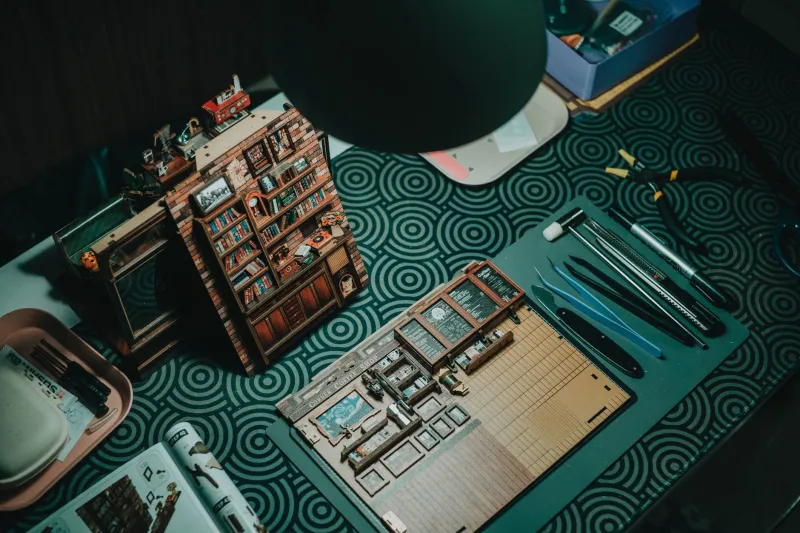
This, too, connects the miniature garden movement to a long tradition in American imaginative culture. The diorama makers, the dollhouse architects, the model railroaders — all have understood intuitively that miniaturization is not diminishment. To render something small is often to render it more visible, more precious, more worthy of grief if it disappears.
What the Small Garden Asks of Us
Perhaps the most philosophically interesting aspect of the terrarium renaissance is the question it poses about control. These are, after all, living systems. They do not always cooperate. Moss spreads where it will. Ferns yellow and recover on schedules their keepers cannot fully predict. The miniature garden, for all its apparent manageability, contains genuine wildness — and that wildness is, for many practitioners, precisely the point.
The goal, as more experienced builders describe it, is not dominion but dialogue. One creates the conditions; the ecosystem responds; one adjusts and observes and adjusts again. It is, in this sense, a practice of humility as much as creativity. The world inside the glass is small, but it is not entirely yours.
Swift's Gulliver, of course, learned something similar. The miniature worlds he visited were not merely smaller versions of the world he knew. They had their own logics, their own dignities, their own resistance to his assumptions. The terrarium, at its best, offers its keeper the same corrective education.
In a culture that often mistakes scale for significance, there is something quietly radical about devoting one's attention to a world measured in inches. The Americans bending over their moss boxes on Sunday mornings, adjusting a stone here and a sprig of fern there, are not retreating from complexity. They are learning, in the only way complexity can truly be learned — slowly, carefully, at close range — how to be present to a world that does not owe them its cooperation.
That, in the end, may be the most important thing a garden of any size can teach.