When Guests Become Gulliver: The American Airbnb Hosts Hiding Entire Fictional Worlds Inside Their Rentals

There is a particular kind of wonder that arrives without announcement. It is the wonder of noticing, mid-reach for a coffee mug on a kitchen shelf, that behind the mugs there exists a fully furnished sitting room no larger than a shoebox — complete with a fireplace the size of a postage stamp, a newspaper folded on a velvet armchair, and a tiny framed portrait of someone who, according to the handwritten note beside it, has been mayor of this unseen borough since 1842. For a certain kind of traveler, that moment of discovery transforms an otherwise ordinary rental stay into something resembling a literary event.
This is, increasingly, by design.
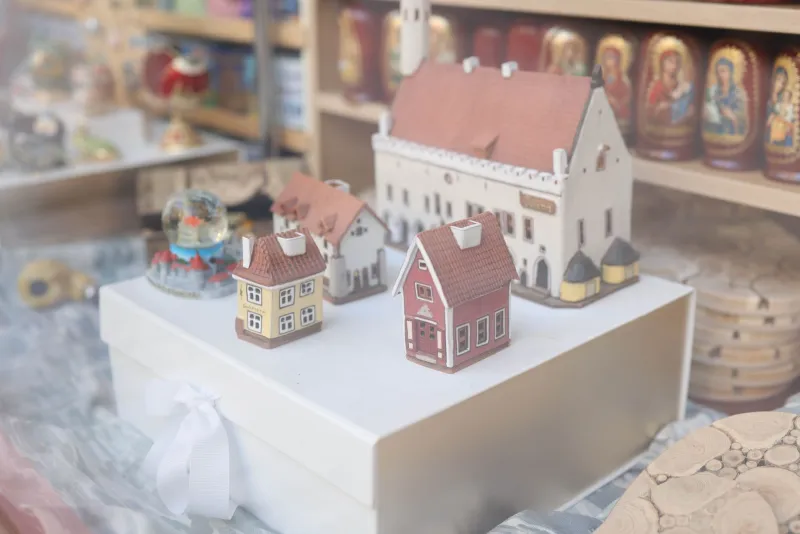
Across the United States, a quiet but deliberate movement is taking shape within the short-term rental market. A growing number of hosts — many of them artists, writers, and devoted readers — have begun constructing intricate miniature civilizations inside their properties and embedding them into the guest experience as a form of participatory storytelling. These are not decorative novelties. They are, in many cases, fully realized fictional worlds, furnished with their own histories, residents, economies, and unresolved dramas, all rendered at a scale that demands both patience and imagination to fully perceive.
The Architecture of Discovery
What distinguishes these installations from conventional décor is the deliberate grammar of their concealment. Hosts describe placing their miniature worlds in locations that reward attentiveness: beneath staircases, behind removable panels in bookshelves, inside the hollow base of a lamp, or nestled within a cabinet that guests might otherwise pass without a second glance. The discovery itself is engineered to feel accidental, replicating the particular thrill that Swift's Lemuel Gulliver must have experienced upon first apprehending the scale of Lilliputian society — the sudden, disorienting recognition that an entire world has been conducting its affairs just beyond the range of ordinary notice.
One host in Asheville, North Carolina, has constructed what she describes as "a borough within a borough" inside the walls of a renovated Victorian rental cottage. Over seven years, she has populated the installation with nearly four hundred hand-crafted residents, each possessing a name, an occupation, and a personal history documented in a leather-bound guest compendium left on the dining table. Guests are not merely invited to observe; they are encouraged to leave written correspondence for specific residents, and subsequent visitors may find those letters answered in the same compendium, in a different hand, as though the fictional community has been quietly corresponding all along.
Hospitality as World-Building
The conceptual ambition underlying these projects is, at its core, a literary one. Many hosts speak of their miniature installations in the vocabulary of fiction writers rather than interior designers. They discuss narrative arcs, unreliable narrators embedded within their lore documents, and the deliberate withholding of information to sustain mystery across multiple guest visits. One host in Portland, Oregon — a former librarian who now operates a craftsman bungalow rental — has structured her miniature world around an unsolved disappearance, leaving clues distributed across seven different installations throughout the property. Guests who wish to may spend an entire weekend attempting to reconstruct what happened, corresponding with other guests via a shared online forum the host maintains specifically for this purpose.
This transformation of accommodation into something approaching immersive fiction speaks to a broader cultural appetite. American readers have long demonstrated an affinity for worlds that reward close attention — from the intricate cosmologies of fantasy literature to the layered domestic interiors of writers such as Mary Norton, whose Borrowers series established the imaginative template that many hosts explicitly cite as their inspiration. What these hosts are doing, in essence, is building the Borrowers' world inside a habitable space and then stepping back to allow guests to stumble into it.
The Lore Document as Literary Form
Perhaps the most revealing artifact of this trend is the lore document — a written account of the miniature world's history, governance, and inhabitants that hosts provide alongside conventional check-in instructions. These documents vary enormously in scope and ambition. Some run to a single laminated page; others constitute genuine manuscripts, complete with appendices, genealogical charts, and competing accounts of disputed historical events. A host in New Orleans has written what amounts to a novella detailing the founding of her miniature world — a fictional city of approximately three hundred souls situated within the walls of a Creole cottage — including rival factions, a great flood, a contested mayoral election, and a philosophical schism over the nature of time.
The lore document occupies an unusual literary position. It is simultaneously a work of creative fiction and a functional hospitality tool, designed to orient guests within a narrative framework that will shape how they perceive their surroundings for the duration of their stay. Hosts report that guests who engage deeply with these documents describe their stays in terms that have little to do with thread counts or proximity to local attractions. They speak, instead, of feeling invited into a story — of moving through a space that possessed an interior life extending well beyond the visible.
What Gulliver Understood That We Had Forgotten
There is an argument to be made that this trend represents a recovery of something Swift understood intuitively: that scale is not merely a physical property but a cognitive one, and that the act of perceiving a miniature world with genuine attention constitutes a form of imaginative exercise that the ordinary dimensions of daily life rarely demand. To crouch beside a baseboard and peer through a tiny arched doorway at a fully appointed kitchen the size of a playing card is to experience, however briefly, the vertiginous reorientation of perspective that defines Gulliver's most instructive moments.
American hospitality has always been, at its most generous, a form of storytelling — the host as narrator, the guest as reader, the property itself as setting. What these hosts are doing is simply making that implicit structure explicit, and then miniaturizing it until it becomes impossible to overlook.
For guests willing to slow down, to look carefully, and to accept the peculiar gift of a world small enough to hold in one's imagination but too intricate to fully exhaust in a weekend, these rentals offer something that no amenity checklist has yet found a way to quantify: the sensation of arriving somewhere that has been waiting, quietly and in considerable detail, for precisely this kind of attention.