The Name on the Shipping Label: Inside the Anonymous Ateliers of America's Most Coveted Miniature Makers
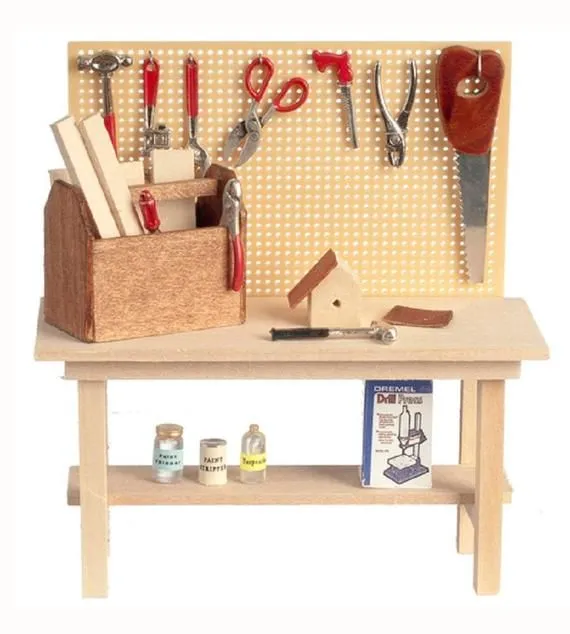
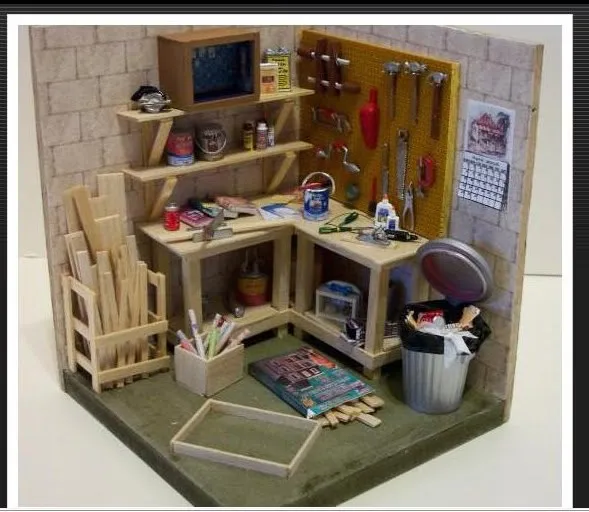
Photo: miniature dollhouse workshop workbench artisan hands crafting tiny furniture, via i.pinimg.com
There is a particular ritual familiar to a small but devoted class of American collectors. A maker — known only by a handle, a monogram, perhaps a photograph of a workbench with no face in it — announces an opening. At the appointed hour, a miniature library no larger than a shoebox appears on a website, priced somewhere between a used car and a down payment on one. Ninety seconds later, it is gone.
The buyer may know the grain of the tiny books lining its shelves. They will not know the maker's name.
The Faceless Workshop
Spend any time in the miniature commissioning world and you encounter the same pattern. The most sought-after builders — the ones with year-long waitlists and collectors who set phone alarms for drops — are, with striking regularity, anonymous. They sign work with initials. They correspond through a single email address. One builder of impossibly detailed fantasy book nooks, whose pieces routinely resell for triple their original price, has reportedly never attended a single convention where her work was displayed.
This is not shyness by accident. It is shyness by design, and the design is working.
Scarcity as a Second Material
Economists have a name for what happens when supply is artificially constrained, but the miniature world has known it intuitively for decades: absence creates aura. A named artist can be researched, compared, critiqued. An anonymous one exists only through the work, and the work, unmoored from a personality, becomes a kind of rumor that trades hands at shows and in collector forums.
There is a literary precedent worth noting. Swift's Lilliputians never learned Gulliver's origins; they projected onto him everything they needed him to be. Collectors of anonymous miniatures do something similar. The faceless maker becomes a vessel for the collector's own imagined biography — a retired machinist in Ohio, a former set designer in Portland. The truth is usually more mundane, and less interesting than the myth.
When the Hobbyist Becomes a Brand That Isn't One
But anonymity has costs, and the makers themselves describe them with surprising candor. Several interviewed through intermediaries — fittingly — described the strain of a business that cannot legally or financially scale. Anonymous makers cannot incorporate under a trade name, cannot license their designs, cannot appear in the museum retrospectives their work increasingly merits. One builder, who constructs miniature tenement interiors of vanished New York neighborhoods, noted that a publisher approached her with a book deal and withdrew when she declined to be photographed.
There is also the question of succession. A named craft passes to an apprentice. An anonymous craft, in a sense, dies with its maker — or worse, gets faked, since anonymity invites forgery the way a blank canvas invites a signature.
A Defense of the Hidden Hand
And yet. In a cultural moment that demands every artisan become a content creator, every workshop a brand, every craft a personality, the anonymous miniature makers have done something quietly radical. They have insisted that the object is the argument. Their tiny rooms ask nothing of the viewer except attention, and they offer nothing in return except the work itself.
In an economy of personal brands, that may be the most valuable thing being built at one-twelfth scale.