The Beauty of the Half-Finished Room: A Case Against Completing Your Miniature World
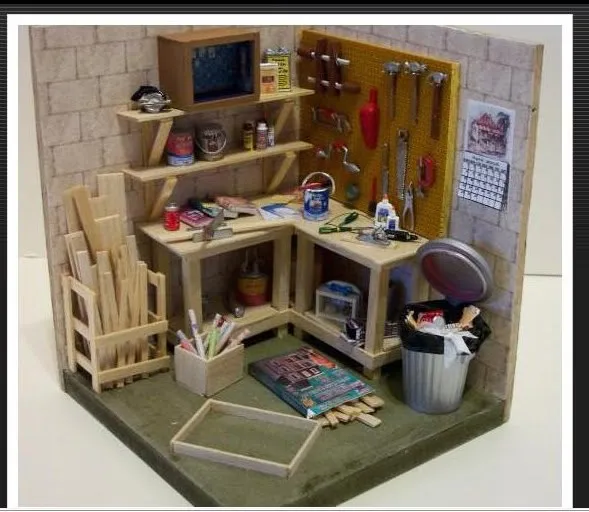
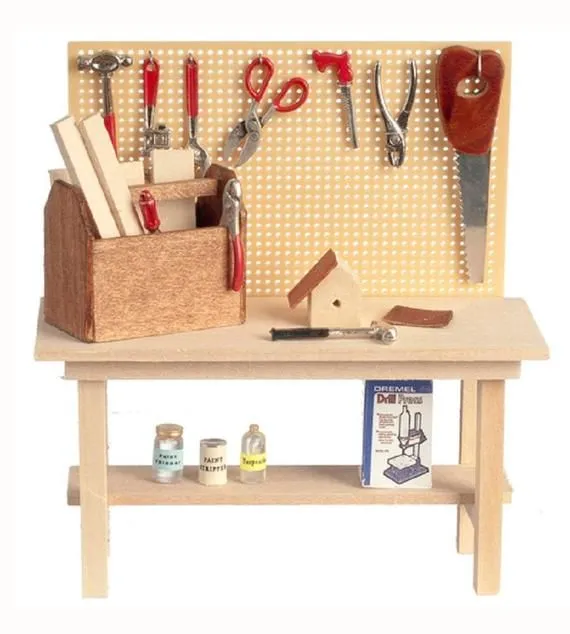
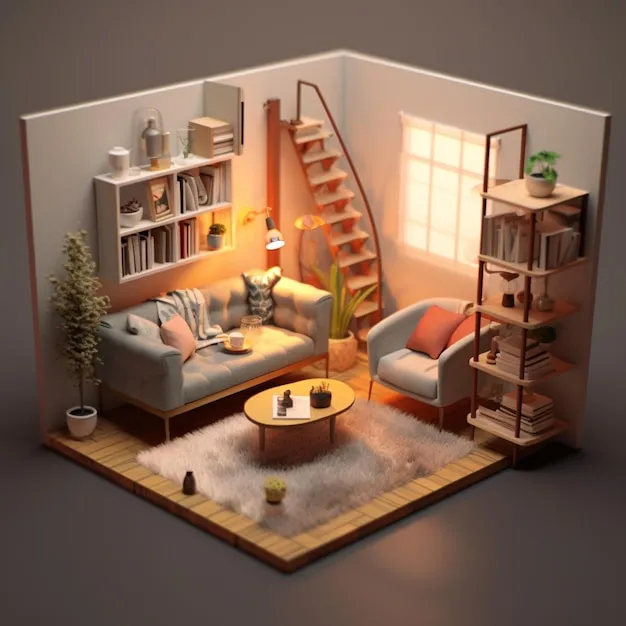
Photo: unfinished dollhouse miniature half-built room craft project workbench, via i.pinimg.com
Somewhere in an American basement right now, a miniature house sits stalled at the same stage it has occupied for four years. The wallpaper is hung in two rooms and torn from the roll in a third. A bag of shingles waits, unglued. And the builder, a perfectly capable adult, feels a low hum of shame every time she passes it.
I would like to make a proposal that the miniature community rarely hears: she should leave it exactly as it is.
The Tyranny of the Completed Project
The miniature world has not escaped the productivity culture that has colonized every other American hobby. Online forums brim with finish-alongs, accountability threads, and a quiet moral vocabulary — wip (work in progress) spoken apologetically, finished announced like a graduation. Craft fairs reward the polished piece. Social media, that great engine of before-and-after, has no format for the project that simply continues.
But miniatures were never meant to be finished. That is a confusion imported from manufacturing, where an object's purpose is to be done. A miniature world's purpose is to be enterable by the mind — and a mind enters an unfinished room far more readily than a sealed one.
What the Empty Room Does
Consider the psychology of open-ended play, the kind child development researchers have spent decades defending against the scripted toy. An incomplete dollhouse — the bare room, the unpapered wall — is an invitation. The finished room says: this is how it is. The unfinished room asks: how might it be? The first is a diorama. The second is a story without an ending, which is to say, a story.
Swift understood this. The most gripping passages of Gulliver's Travels are the ones where the world exceeds its description — where Lilliput is sketched and the reader's imagination furnishes the rest. Precision, past a certain point, does not deepen wonder. It forecloses it.
The Slowest Craft in the Fastest Country
There is also a temporal argument. Miniature work is among the slowest crafts practiced in the fastest nation on earth — hours bent over a chandelier the size of a thimble, a week of evenings spent on a floor no larger than a greeting card. The culture insists this slowness is a problem to be solved: use the pre-cut kit, outsource the shingles, finish the thing so you can post the thing.
But the unfinished project performs a service no finished one can. It guarantees continuation. It ensures that tomorrow evening there is still a world waiting on the workbench — that the builder has a standing appointment with a small, quiet, unclaimed country. The completed house is a museum. The half-built one is a companion.
A Modest Resolution
So: leave the last room bare. Let the shingles stay in their bag. When guests ask when you will finish, tell them the truth — that you are not building a house, you are keeping one. The empty room at one-twelfth scale is not a debt outstanding. It is the most generous thing a maker can offer a world: room to keep becoming.