The Healing Table: How Mental Health Practitioners Are Discovering the Therapeutic Power of Miniature Construction

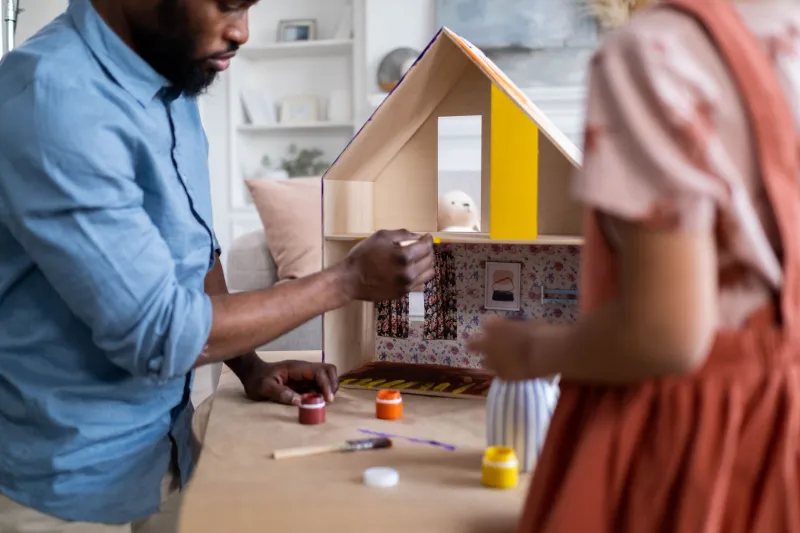
Photo: therapist patient miniature model building craft therapy session, via img.freepik.com
The therapy room, as most Americans have encountered it, is a carefully neutral space. Soft lighting, a box of tissues on the table, two chairs angled toward each other at a distance calibrated to suggest openness without intimacy. It is a room designed to hold words — the medium through which, in the dominant tradition of Western psychotherapy, healing is presumed to occur.
But words, as any practitioner will quietly acknowledge, do not always come. Grief resists articulation. Trauma retreats from direct examination. Anxiety, by its nature, distorts the very cognitive processes required to describe it accurately. For certain patients, the talking cure reaches a wall, and the therapist and client sit on either side of it, equally aware of what is not being said.
It is in response to this familiar impasse that a small but growing number of American mental health professionals are turning toward an unexpected intervention: the miniature world.
What the Hands Know
The theoretical foundation for miniature construction as a therapeutic tool draws on several converging bodies of research. Occupational therapists have long understood that fine motor engagement — the kind demanded by cutting, painting, placing, and assembling at small scale — activates attentional systems in ways that interrupt the ruminative loops characteristic of anxiety and depression. The hands, in this framework, are not merely executing the mind's instructions; they are, in some meaningful sense, doing their own thinking.
This insight connects to a broader movement within clinical psychology toward what practitioners call embodied or somatic approaches — therapeutic modalities that engage the body as a site of healing rather than treating it as merely the vehicle that delivers the mind to the appointment. Miniature construction, with its demand for sustained physical attention and its resistance to distraction, fits naturally within this framework.
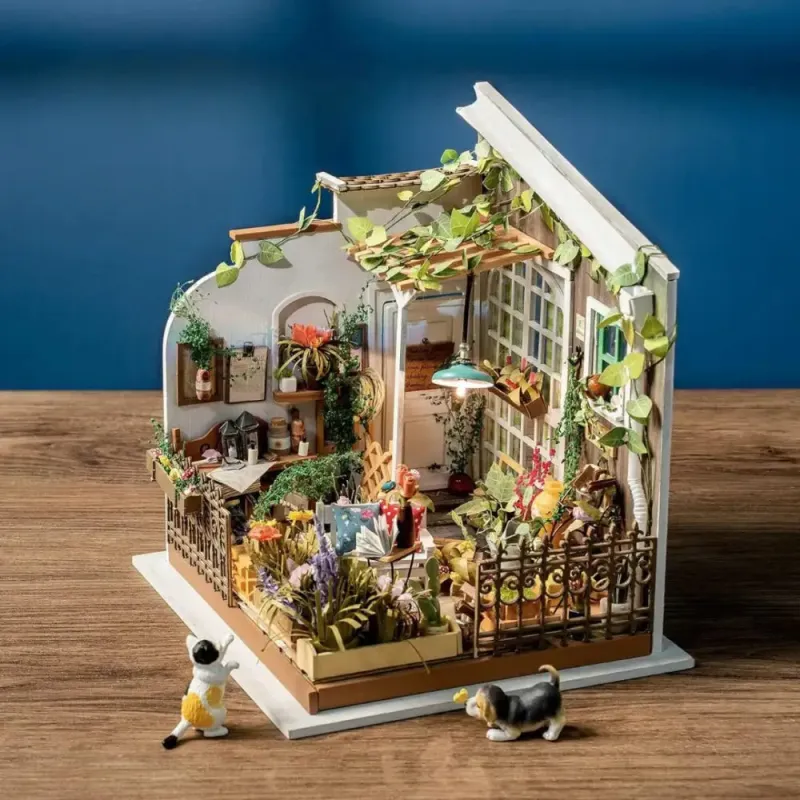
What distinguishes it from other craft-based interventions — knitting circles, adult coloring books, pottery classes — is the element of world-building. The miniature practitioner is not merely making an object; she is constructing an environment, populating it, governing it, and in doing so, externalizing something of her own interior landscape. This is where the clinical possibilities become most interesting.
The World Outside the Self
Sandplay therapy, developed in the mid-twentieth century by the Swiss analyst Dora Kalff building on the work of Margaret Lowenfeld, established a precedent for using small-scale environments as diagnostic and therapeutic tools. Patients arrange miniature figures in a sand tray, and the arrangements they create — the characters they choose, the conflicts they stage, the resolutions they construct or withhold — are understood to reflect psychological material that verbal communication might not reach.
Miniature world construction extends this logic into a more sustained, more patient, and more materially demanding practice. Where sandplay therapy typically occurs within a single session, the construction of a miniature world unfolds over weeks or months. The therapeutic value, practitioners who have begun recommending the practice suggest, lies precisely in this duration. The patient returns to the same small world repeatedly, adjusting it, elaborating it, sometimes dismantling and rebuilding it — a process that mirrors, in compressed and manageable form, the iterative work of psychological change.
For patients processing loss, the miniature world offers something particularly valuable: a space in which what has been lost can be reconstructed and tended. The grieving person who builds a miniature version of a childhood home, or a departed family member's workshop, or a neighborhood that no longer exists, is engaging in an act of active remembrance that differs qualitatively from the passive ache of memory. The hands are doing something with the loss. The loss is being, in a literal sense, held.
The Digital Detox That Actually Works
Clinicians who have experimented with recommending miniature construction to patients struggling with technology-mediated anxiety report a consistent finding: the activity is one of the few they have encountered that reliably draws patients away from their screens without generating the restlessness and withdrawal symptoms that more prescriptive digital detox approaches tend to produce.
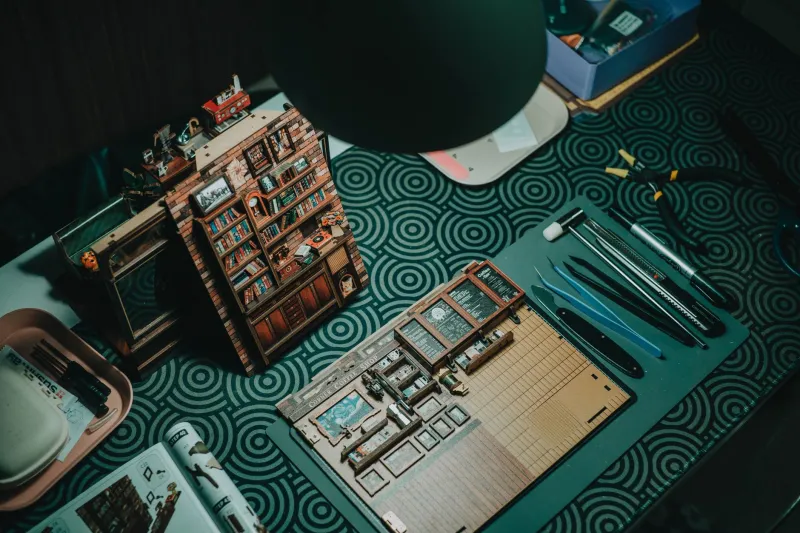
The reason, these practitioners hypothesize, is that miniature construction offers what digital environments promise but cannot deliver: genuine novelty, genuine difficulty, and genuine reward. The algorithm's infinite scroll simulates engagement while delivering very little of it. The miniature world demands real attention and returns real accomplishment — a tiny finished room, a painted facade, a functioning miniature bookshelf stocked with spines the builder has lettered by hand.
This distinction matters clinically. Patients who feel chronically understimulated by their actual lives and overstimulated by their digital ones — a combination that clinicians are encountering with increasing frequency — find in miniature construction a middle register that neither extreme provides. The work is absorbing without being overwhelming. It is slow without being boring. It asks for concentration without demanding the performance of productivity.
Gulliver's Prescription
There is something almost literary about the therapeutic miniature world — something that would not have surprised Swift, who understood that the act of looking down upon a small civilization clarifies the observer's perception of the large one she inhabits. The patient who constructs a tiny world and then sits before it, examining what she has made, is engaging in a form of perspective-taking that talk therapy sometimes struggles to achieve.
She is, briefly, a giant — sovereign over something, capable of order and arrangement, possessed of a view from above that her daily life rarely affords. And in that momentary sovereignty, something loosens. The anxieties that felt totalizing, the losses that felt unmanageable, the displacements that felt permanent — they remain, but they are briefly visible from a distance, held within a frame the builder herself has constructed.
The therapeutic miniature world is, in this sense, continuous with the broader tradition that Retell Lilliput exists to honor: the tradition of the small world that holds, within its carefully made boundaries, something too large for the world outside to contain. It is, like all the best miniatures, a space in which imagination and reality negotiate — slowly, tactilely, one tiny detail at a time — toward something that might, with patience, be called peace.