Tiny Tyrannies, Miniature Uprisings: The Political Art Hidden Inside America's Dollhouses
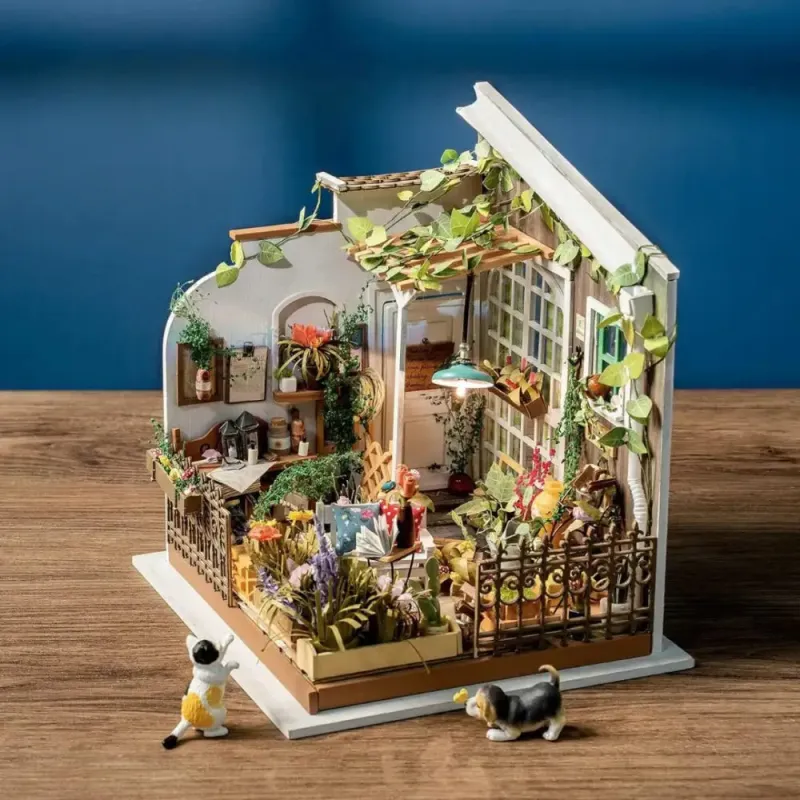
Photo: miniature diorama political protest tiny figures city scene, via book-nook-store.com
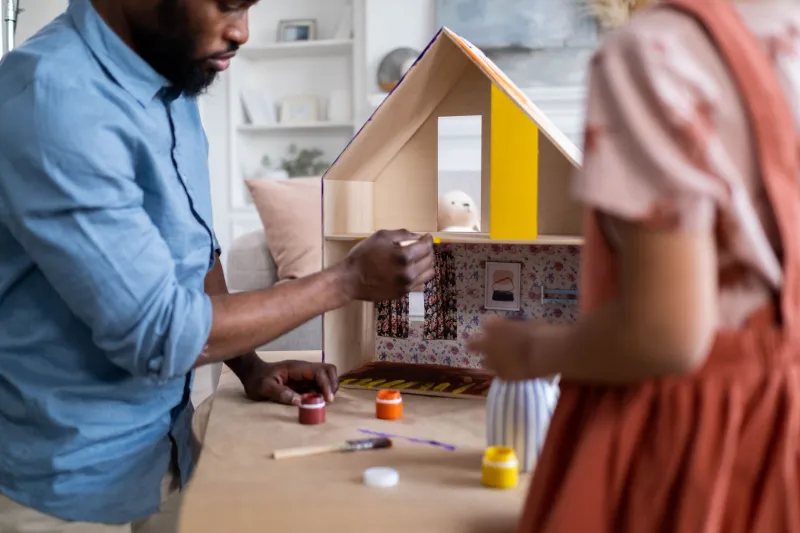
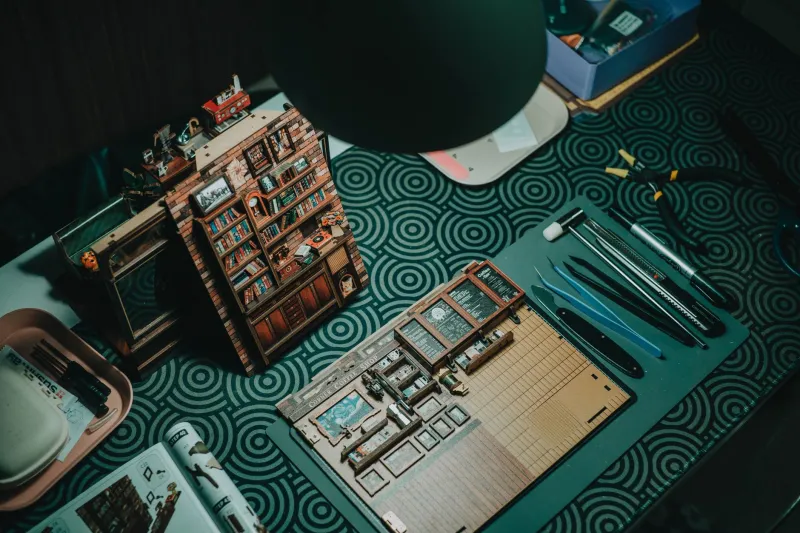
There is a particular pleasure in looking down upon a world you have made entirely yourself. The streets are yours to design. The laws are yours to write. The monuments — and the ruins — are yours to place exactly where you choose. For most miniature builders, this sovereignty is a comfort, a creative retreat from the noise of contemporary life. But for a growing number of American artists working at one-twelfth scale, the act of construction has become something more deliberate, more pointed, and considerably more political.
They are building dystopias in shoeboxes. They are staging revolutions beneath glass domes. They are encoding, in painstaking miniature, the social conditions they find most alarming about the world outside their studios.
The Architecture of Dissent
Political art is nothing new, of course. From Diego Rivera's murals to Banksy's stencils, artists have long used their chosen medium to challenge prevailing power. What distinguishes the miniature political tradition is its peculiar intimacy. A mural demands an audience. A tiny diorama, by contrast, draws the viewer close — forces them to stoop, to squint, to enter the world on its own terms. The power dynamic inverts. The observer becomes, briefly, Gulliver.
This inversion is not incidental. Jonathan Swift understood it well when he sent his fictional traveler to Lilliput. The smallness of that island nation was never merely whimsical; it was a satirical instrument, a way of shrinking the pretensions of power until their absurdity became visible. Contemporary miniature artists working in a political vein are, whether consciously or not, inheritors of that tradition.
Consider the proliferating subgenre that builders themselves sometimes call "governance dioramas" — scenes depicting surveillance states, resource hoarding, bureaucratic indifference, or the architecture of inequality. One such piece, documented on a small Midwestern arts collective's newsletter, depicted a miniature city in which one gleaming skyscraper occupied nearly half the available land, while the remaining citizens lived in structures made from matchboxes and aluminum foil. The creator offered no explanatory label. The composition made its argument without one.
Playing at Power, and Playing With It
What makes miniature political expression distinctive from other forms of protest art is the role of agency — specifically, the builder's total control over the world they construct. Researchers who study creative practice have noted that individuals who feel constrained or marginalized in their daily civic lives often gravitate toward artistic modes that restore a sense of mastery. The miniature world, in this reading, is not escapism so much as rehearsal.
Builders who work in this vein frequently describe their practice in terms of experimentation. They construct alternative political systems — cooperative economies, non-hierarchical governance structures, commons-based resource arrangements — and then populate those systems with tiny figures whose lives play out according to different rules. It is, in effect, applied political philosophy conducted with tweezers.
The therapeutic dimension here overlaps with the artistic one. There is genuine relief, many builders report, in being able to arrange the world according to principles of fairness, however small that world might be. When the arrangement fails — when the tiny republic collapses under the weight of its own contradictions, as sometimes happens in the most ambitious multi-scene installations — that failure, too, becomes instructive.
The Tradition They Are Joining
Swift's Lilliput was populated by a society so consumed by factional dispute that its citizens fought wars over which end of an egg ought properly to be broken first. The satirical target was the political culture of early eighteenth-century England, but the critique translated across centuries because the underlying pathology — the elevation of procedural grievance above substantive justice — is perennial.
American miniature artists working in a political register are engaging with a lineage that extends well beyond Swift. The tradition of the political puppet — from Punch and Judy to the Bread and Puppet Theater's enormous papier-mâché figures — has always understood that scale manipulation carries rhetorical power. To make something small is to suggest its ultimate contingency. To make something tiny and then subject it to recognizable political forces is to ask, quietly but insistently, whether those forces deserve the authority they claim.
Some builders work with historical scenarios, reconstructing the conditions of labor strikes, civil rights confrontations, or colonial encounters in miniature, as a way of making visible the structural forces that official histories often obscure. Others work in speculative futures, building post-collapse settlements or climate-refugee encampments that serve as warnings rather than memorials.
Limits and Possibilities
There are, of course, legitimate questions about the political efficacy of art that fits inside a display case. A miniature dystopia, however meticulously constructed, does not organize a precinct or fund a campaign. Critics of what might be called the aestheticization of dissent have long argued that art which transforms political frustration into creative product risks substituting the gesture for the action.
This is a fair challenge, and the most thoughtful builders in this space tend to acknowledge it directly. The miniature political world, they argue, is not a substitute for civic engagement but a supplement to it — a space in which ideas can be tested, emotions processed, and arguments developed before they are carried into the larger world. The act of building a tiny revolution, one careful detail at a time, is in this sense an act of preparation as much as expression.
What Swift knew, and what these builders seem to understand intuitively, is that the imagination requires practice. Before a world can be remade, it must first be imagined — held in the mind, turned over, examined from every angle. The miniature table is, for these artists, a drafting room for the possible. The revolutions they build there may be small. The thinking they enable is not.